The inside story of the poker boom: ‘We blew the doors off’

[ad_1]
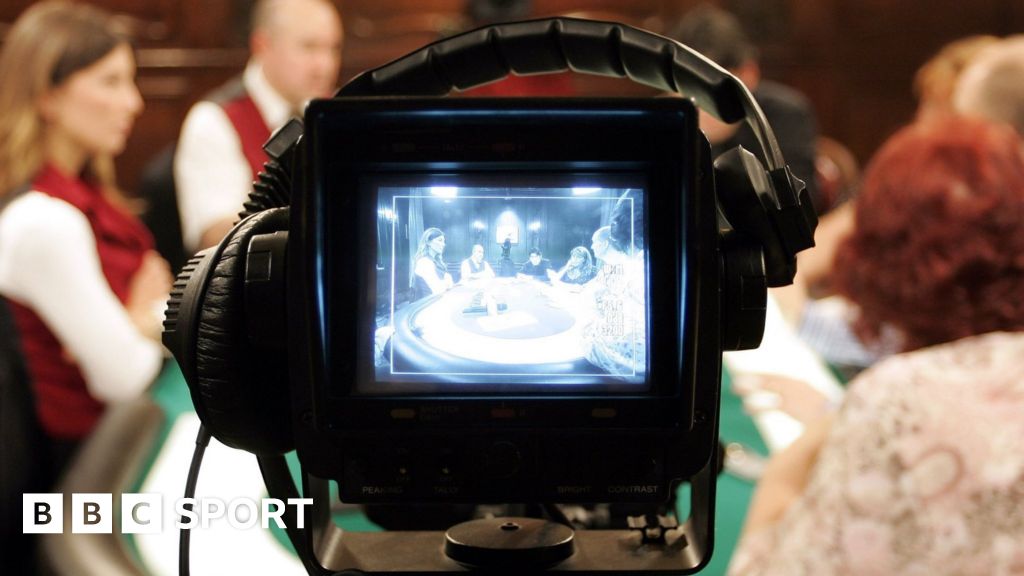
Esfandiari, now 43, lives with his wife and children in Venice Beach, California. He says the poker scene has “completely changed” since the early 2000s.
“Back then poker was so fresh that if you won one event you were an instant star,” he says. “Fast forward to today, you can win four and nobody knows you.”
He believes the standard has also improved – “there are no bad players left” – owing partly to “the internet and the vast knowledge available, all the training videos”.
He also believes it isn’t as interesting. Esfandiari and others have been critical of some newer players adopting the Game Theory Optimum approach, which heavily draws on mathematics in its strategy. Those who favour it have been accused of lacking charisma and innovation – two of the key elements that helped grow poker’s popularity on TV.
That there are players like Esfandiari, players who have enjoyed consistent success over a number of years, supports the case that poker requires skill and strategy. But nonetheless the game always comes with big risks – such as that of problem gambling.
A 2018 study published in Australia found 39% of the regular poker players it surveyed had moderate to severe gambling problems, while around a quarter had caused financial problems for themselves or their households.
Lipscomb, who sold his stake in the WPT in 2009, says they would “spend time making sure, particularly in tournament poker, that you can only pay a certain amount and it’s all you can lose”.
He also believes problem gamblers are less likely to be found among professional poker players.
One recent case exposes the limitations behind that argument.
Dennis Blieden, a former WPT champion, was sentenced to six and a half years in prison in June 2021 for embezzling $22m (£19.3m) from his employer StyleHaul, a media agency, where he was in charge of accounts.
In a letter to the judge, Blieden, 31, outlined how his gambling addiction had started at a young age, before worsening in line with his poker career.
He described how he “idolised” the stars of the ‘poker boom’ and became “obsessed” with matching their achievements.
With stolen funds he entered high-stakes competition and won $1m (£8.77m) in the LA Poker Classic of 2018. The “validation” that brought was “no doubt an accelerant in my gambling”, he wrote, adding: “I did everything I could to keep that reputation alive.”
Esfandiari recalls a time when as a younger man he worried he might have a gambling addiction. But over 20 years on he says “professional players don’t see poker as gambling, it’s a calculated risk”.
He adds: “For about a month and a half when I was 21, I was playing poker every single day. I was waiting tables, player poker, waiting tables, playing poker, and I realised it was too much.
“I realised I didn’t want to end up as someone spending their whole life in the casino, losing all their money, even though I was actually winning. So I decided to tone it down.
“But when you sit down to play roulette, craps or blackjack, any of those sort games, you’re against the casino. Every time you bet $100, you’re losing two, three, four five bucks mathematically.
“Poker players on the other hand, we believe we are the casino when we sit down.
“When you play poker against good players and you’re a bad player, you’re going to lose money against the good player. It might not be that day, but by the end of the year the pro will take the money.
“You have to put in the work. You can’t just show up and think you’re going to beat the best.”
Source link